Friday, July 31, 2026

PRIMARY ELECTION ON AUGUST 1ST. A CATHOLIC PERSPECTIVE.

 Posted by Frenchie


This Saturday August 1st 2026 voters on Guam will cast their ballot to select who will be on the ballot in the November 3rd general election. The field of candidates is a little larger than on previous primaries, at least of recent past. For Catholics it can be a little confusing to navigate the field of candidates, specially since the claims on social media are as numerous as they are fantasist  for the most part.


For many Catholics, the choice can be Cornelian at best. If you are pro life from birth until natural death, many of said candidates should be easy not to vote for. The situation becomes a little more mirky with some of the Republican candidates. The confusion is particularly stark with the candidacy of Tony Ada. I have already written extensively about the issues surrounding his membership with the Masonic Temple, and his getting close to some very anti catholic organizations. 


While the likes of Josh Tenorio, and other candidates who would do anything for a vote, can be understood, even if you do not condone it, it becomes problematic for candidates like Tony Ada, when you try to grab votes from people that are openly opposed to the values you profess publicly.  I was therefore not surprised, but still very disturbed to see the Ada Calvo campaign take a full page ad in the Post to celebrate the 112 anniversary of the Filipino congregation of Iglesia ni Cristo, the masonic pseudo Christian and rabid anti Catholic organization which works tirelessly to combat the Catholic faith.

Therefore, I humbly suggest that if you intend to vote for a republican candidate for Governor, the Ada Calvo ticket should not be an option, and instead chose their opposition. We do not need a potential Governor who is willing to support enemies of the Church.

Thursday, July 30, 2026

THE WHISTLEBLOLWER OF AGANA

# The Whistleblower of Agana: An Analytical Study of Tim Rohr, Civil Advocacy, and the Institutional Crisis in Guam's Catholic Archdiocese

By GEMINI (emphases added)

The socio-religious history of Guam underwent a fundamental realignment during the 2010s, driven by an intense governance and abuse crisis within the Roman Catholic Archdiocese of Agana. At the center of this institutional confrontation was Tim Rohr, a local real estate agent, devout traditionalist Catholic layman, and investigative blogger. Through his website, *JungleWatch*, Rohr evolved from an ideological ally of the archdiocesan hierarchy into its most formidable public adversary. His sustained documentation of diocesan administration exposed structurally opaque financial practices, severe governance conflicts involving foreign lay movements, and decades of concealed clerical sexual abuse. This advocacy ultimately contributed to the canonical conviction and exile of Archbishop Anthony Sablan Apuron, the passage of landmark civil legislation on Guam, and an unprecedented restructuring of the island's ecclesiastical institutions.

## Profile and Ideological Foundations

Prior to his role as an ecclesiastical whistleblower, Tim Rohr operated within Guam's public sphere as a conservative civic advocate and orthodox Catholic layman. A real estate broker by profession and a father of eleven children who regularly attended the traditional Latin Mass, Rohr’s socio-religious worldview was anchored in strict doctrinal orthodoxy and traditional liturgical practice. Throughout the late 2000s, Rohr engaged prominently in local legislative politics, particularly regarding pro-life and family policy initiatives.

Working alongside civic groups such as *Lina'la' yan Esperansa* ("Life and Hope"), Rohr and members of his family, including his daughter Mia, frequently submitted formal testimony before the Guam Legislature. Most notably, during the 29th Guam Legislature's deliberations on Legislative Bill 374—the Partial-Birth Abortion Ban Act of 2008—Rohr and his allies vigorously advocated for statutory prohibitions on late-term procedures, framing the measure as an essential legal protection for the unborn. During this period, Rohr’s political trajectory aligned closely with that of Archbishop Anthony Sablan Apuron.* Both figures mobilized public sentiment against legislative proposals concerning legal abortion access, casino gambling, and the recognition of same-sex unions. Demonstrating his early adherence to legal and institutional stability, Rohr even opposed a 2011 legislative effort that sought to temporarily lift the statute of limitations for civil sexual abuse lawsuits—a policy position he would dramatically repudiate half a decade later as the systemic nature of church corruption became undeniable.

*GEMINI would not have known the backstory on this. Apuron did nothing relative to my pro-life legislative efforts. He also did nothing to oppose legislative efforts to legalize same-sex unions. In that regard, it was Fr. Francis Walsh, a Neocat, who publicly opposed the legislation and did so via Apuron's stationery to make Apuron look like he was actually doing something. Also, I had nothing to do with Apuron's campaign against gambling. In fact, I publicly criticized his misuse of the pulpit in that regard. Much of this will be laid out in great detail in my upcoming book: "Orchestrated."

## Institutional Fractures: The Neocatechumenal Way and Property Governance

The ideological alignment between Rohr and the archdiocesan leadership broke down over administrative and theological divergences concerning the Neocatechumenal Way (NCW), a post-Vatican II itinerary of Christian formation introduced to Guam in the late 20th century. Traditionalist Catholics, led in the public arena by Rohr, asserted that the NCW operated as an insular, sectarian movement that altered canonical liturgical norms, fractured parish cohesion, and marginalized native Chamorro Catholic customs.

The primary catalyst for open institutional conflict centered on the control and administration of diocesan real estate, most notably the Redemptoris Mater Seminary (RMS) located at the former Accion Hotel property in Yona. Archbishop Apuron sought to grant the NCW perpetual access and administrative control over the multimillion-dollar, oceanfront facility, which had been acquired using archdiocesan financial resources and bank loans secured by parish contributions. Rohr and lay research collectives, including the Concerned Catholics of Guam (CCOG), conducted exhaustive reviews of land title deeds, corporate filings, and canonical regulations. They revealed that Apuron had executed deed restrictions and corporate restructurings that effectively transferred operational control of the property to an independent board dominated by NCW leadership, circumventing the necessary oversight of the Archdiocesan Finance Council and the Holy See.

The Chancery defended the property transaction, maintaining that the Archdiocese of Agana remained the sole legal owner under its Corporation Sole status, and emphasizing that the seminary provided vital theological formation accredited by the Pontifical Lateran University. However, administrative actions against respected local diocesan priests escalated public suspicion. In 2013, Archbishop Apuron removed Father Paul Gofigan from his pastorate at Santa Barbara Parish in Dededo, an action critics attributed to Gofigan's resistance to NCW practices within his parish. This was followed in July 2014 by the abrupt ouster of Monsignor James Benavente, Rector of the Dulce Nombre de Maria Cathedral-Basilica and Director of Catholic Cemeteries. The Chancery publicly accused Benavente of financial mismanagement involving millions of dollars in debt and credit card expenditures. Rohr published detailed commentaries refuting the Chancery's claims, demonstrating that Benavente's financial decisions had been authorized by diocesan councils, and alleging that the charges were orchestrated to remove a prominent native priest who opposed the NCW's financial demands.

## JungleWatch and the Dynamics of Lay Resistance

In 2013, Rohr established *JungleWatch*, a digital platform initially designed as a repository for news articles regarding the Archdiocese of Agana. The blog rapidly evolved into a major investigative forum and public outlet for disaffected parishioners, whistleblowers, and local clergy. By maintaining an open, unmoderated comment environment, *JungleWatch* systematically dismantled the traditional island taboo (*mungnga sangan*) against challenging ecclesiastical authority. The blog generated over 8.2 million views and attracted an international readership following Catholic governance issues.*

*As of today, 7/29/26, there are 19,918,822 views. The page view counter is in the sidebar.

The archdiocesan leadership responded to *JungleWatch* with aggressive public and institutional countermeasures. Priests affiliated with the Chancery instructed parishioners from the pulpit that reading the blog was sinful, while official archdiocesan press releases explicitly denounced Rohr, accusing him of conducting a malicious campaign of lies and "publicly lynching" the Archbishop. In October 2013, a senior Vatican official dispatched a letter to Rohr directing him to cease his public criticisms of Archbishop Apuron.*

*The letter was from Cardinal Edwin O'Brien, then the Grand Master of the Order of Knights of the Holy Sepulcher of Jerusalem. The documents are at this LINK.

Despite these directives, lay resistance expanded into sustained civic action. Coalitions such as the Concerned Catholics of Guam (CCOG) and the Laity Forward Movement organized 54 consecutive weeks of peaceful protests outside the Cathedral-Basilica in Hagåtña, demanding public financial audits, the restoration of ousted priests, and Vatican intervention. In early 2015, a Vatican Apostolic Delegation arrived on Guam to investigate the mounting governance disputes. Although Chancery officials initially omitted Rohr from the official itinerary, the Vatican delegates personally summoned him to a private hearing, where Rohr presented documentation detailing financial irregularities, administrative intimidation, and the marginalization of diocesan clergy.

## Uncovering Systemic Abuse: The Campaign Against Archbishop Apuron

The institutional struggle underwent a profound transformation in mid-2016 when Rohr, collaborating with former archdiocesan finance council member Richard Untalan, shifted focus from governance and property disputes to historical allegations of clerical sexual abuse. Recognizing that financial disputes alone had not compelled the Vatican to remove Apuron, Rohr organized a systematic strategy to persuade former altar boys from the 1970s to come forward publicly with their accounts.*

*It wasn't just me, but I was the face of it.

In May 2016, Roy Quintanilla became the first victim to publicly disclose that he had been sexually abused as a twelve-year-old altar boy by Anthony Apuron during Apuron's tenure as a parish priest in Agat. Quintanilla's public revelation encouraged other survivors to step forward, including Roland Sondia, Walter Denton, and Leo Concepcion.* Denton disclosed that he had been repeatedly raped by Apuron at age twelve, while Sondia detailed severe sexual molestation within the parish rectory. The disclosures quickly broadened beyond Apuron to encompass systemic abuse across the archdiocese, implicating at least sixteen priests, including Father Louis Brouillard, who confessed to abusing up to twenty boys while continuing to receive archdiocesan financial support.

*Correction: Leo Tudela and Doris Concepcion

The public emergence of these allegations produced immediate legal, political, and canonical consequences across the territory:

 * In response to public outrage catalyzed by survivor testimonies, the 33rd Guam Legislature passed public legislation in late 2016 lifting the civil statute of limitations for child sexual abuse claims, opening a retroactivity window for historical cases.

 * Over 160 civil lawsuits were filed in local and federal courts against the Archdiocese of Agana, individual clergy members, and associated entities such as the Boy Scouts of America. The volume of claims gave Guam a per-capita abuse litigation rate more than five times higher than that of the Archdiocese of Boston.

*By 2019, when the archdiocese declared bankruptcy, there were over 300 civil lawsuits and the litigation rate was 14 times the size of Boston's. 

 * The pervasive socio-religious influence of the Church on Guam compelled every sitting judge on the Superior Court of Guam to recuse themselves from presiding over the civil claims.

 * Archbishop Apuron fled Guam shortly after the allegations were disclosed, maintaining his innocence while taking refuge in mainland locations. The Vatican initiated a formal canonical trial in Rome, presided over by Cardinal Raymond Burke. In 2018, the Holy See announced a guilty verdict, stripping Apuron of his archdiocesan office and banning him from ever returning to Guam.

 * In addition to canonical proceedings, abuse survivors filed a $2 million civil defamation lawsuit against Apuron and the Chancery after church representatives publicly accused the victims of fabricating claims for financial gain.

## Quantitative and Comparative Overview of the Crisis

The following structured comparison illustrates the institutional positions, advocacy actions, and ultimate legal and canonical outcomes that defined the archdiocesan crisis on Guam.


## Broader Socio-Religious and Legal Implications

The systematic exposure of institutional failure on Guam provides profound insights into the mechanics of lay activism, digital communications, and institutional accountability within the contemporary Catholic Church.

A central insight emerging from Rohr’s activism is the efficacy of conservative orthodoxy as a driver of institutional whistleblowing. Historically, public pressure on Catholic ecclesiastical structures has often emerged from progressive reform groups seeking modernizing structural changes. In contrast, Rohr operated from a platform of traditional Catholic orthodoxy, emphasizing canonical adherence, traditional liturgy, and institutional preservation. This ideological posture insulated him from standard ecclesiastical defenses that brand critics as theological dissenters. Rohr articulated his position through the theological principle: "You don't leave Jesus for Judas". By explicitly framing corrupt bishops as modern iterations of Judas while maintaining total fidelity to traditional Catholic doctrine, Rohr provided a coherent rationale for devout parishioners to oppose their local archbishop without feeling they had compromised their religious faith.

The Guam crisis also highlights how digital media platforms can dismantle insular power structures within small island societies. In small, close-knit communities, social ties and deference to religious authorities historically enforced secrecy surrounding institutional wrongdoing. The introduction of an unmoderated, highly accessible digital venue (*JungleWatch*) altered these power dynamics by granting anonymous speech protections to insular populations. This platform enabled victims to realize that their individual trauma was part of a broader pattern of systemic exploitation. The resulting shift in public sentiment occurred rapidly enough to paralyze the Chancery’s public relations apparatus, force the recusal of the entire local judiciary, and compel external canonical intervention from Rome.

Finally, the crisis reshaped the conceptual relationship between civic society and religious authority on Guam. In his post-scandal public addresses to civic and professional organizations, Rohr emphasized that the catastrophic failure of ecclesiastical and legislative institutions demonstrated the necessity of returning primary protective responsibility to the family unit. He argued that decades of institutional deference had led parents to entrust children uncritically to authority figures, creating the environment in which abuse flourished undetected. This structural shift from institutional trust to active lay oversight represents a permanent transformation in Guam’s socio-religious landscape, establishing a precedent of continuous public accountability for religious governance throughout the Pacific region.

## Conclusion

Tim Rohr’s investigative journalism and public advocacy fundamentally altered the governance of the Catholic Church on Guam. What began as an effort to examine land records and protect traditional liturgical practices developed into a comprehensive exposure of institutional corruption and historic sexual abuse. By mobilizing lay resistance through *JungleWatch*, facilitating survivor disclosures, and navigating the complexities of civil and canonical law, Rohr contributed directly to the canonical conviction of an archbishop, sweeping statutory reform, and the reassertion of lay accountability over ecclesiastical institutions.

Tuesday, July 28, 2026

HOW TO NOT BE AN ARCHBISHOP

Submitted by a concerned Catholic


LINK to video

Our clergy seems to be more politically inclined than what is healthy. 

Blessing facilities is one thing, and after the blessing the clergy should depart…their part is complete. But to stick around to wave and to speak to supporters is a reach too far. 

And to attend political rallies without a mission purpose is flat out wrong. And when an Archbishop does so it looks like the island Church supports that candidate. 

Such is the problem when Archbishop Ryan attends any gathering for Josh/Tina and they use his image in a political campaign. 

FROM ANNA IN POLAND

 Hi Tim,

I have been a member of NCW. I am very concerned about cult behaviours in Catholic Church. In my country, Poland it is not only the risk of cult-like communities from global well-known movements but also we have several "priests" that went suspended and they have a lot of "fans" and followers even if they are not within Catholic Church anymore.

For this reason I created the page (in Polish language only) https://neonyszeptem.pl/

There I collect valuable podcast, articles and books that help to distinguish between healthy faith and religion and neurotic religiosity or abuse, as well as about movements - the critical ones and the ones that are very supportive for them.

I also write opionions about books I've read and in some time I plan to write my own book.

Regarding NCW, I read a book by Polish Jesuits that introduced NCW to Poland, and I have learnt about the "Polish path" the NCW founders had to John Paul II thanks to them. ( To remind - John Paul II who was a Pope for quarter of century, and supported all new movements was from Poland, my country)

I have also have an interesting books - that is a compilation of emails from a family on Mission Ad gentes. Some may say it is full of faith and humility, I have consideration whether it is Stockholm syndrom... Are you aware about any publication about a family on NCW ad gentes mission?

Tuesday, July 14, 2026

HOW THE NCW EXERTS HARMFUL AUTHORITARIAN CONTROL


Chuck White's presentation on the cult-like nature of the NCW.  Using Steven Hassan's models of authoritarian groups, Chuck demonstrates how 13 elements from the first four stages of the Way are leveraged to exert harmful authoritarian control.  https://youtu.be/UirqWotxFcM

THE TRUTH ABOUT BERNARDIN AND ‘AGNES’ - THE TRUTH ABOUT CLERICAL ABUSE TAG TEAMS

By Gene Thomas Gomulka

"The 'bottom line' is that the Catholic Church does not need a Synod and should not be excommunicating tradition-loving clergy and laity who reject the appointment and promotion of closeted, pro-LGBTQ prelates like Freiburg Bishop Christian Würtz and so many others. What the Church really needs is a truly Catholic pope and straight, chaste, faithful Catholic clergy."

FULL ARTICLE

Sunday, July 12, 2026

MORE SEX SCANDALS AND COVER-UPS

By Gene Thomas Gomulka

Gene Thomas Gomulka is a retired (O6) Navy Captain/Chaplain, author, investigative reporter, and screenwriter. He also works pro bono as an investigator and sex abuse victims’ advocate for those who were abused by Catholic bishops or priests. 

+++++

Shortly after Buffalo WKBW 7 News I-Team Chief Investigator, Charlie Specht, and his colleague, Jeff Wick, reported Father Jeffrey Nowak in 2019 for sexually harassing a seminarian, I published “Addressing the Present-Day Culture of Sexual Predation and Cover-Ups in U.S. Seminaries.” Copies of this report, which made mention of Nowak’s behavior and Bishop Richard Malone’s cover-up, were sent to every U.S. Bishop, seminary rector, vocation director, safe environment coordinator, as well as Knights of Columbus (KOC) leadership and KOC Councils throughout the United States. Although Nowak was removed from ministry, he was never laicized, but continued to be paid, fed, and comfortably housed by the Buffalo Diocese until Wednesday, 8 July 2026, when FBI agents raided his residence while he was in the act of masturbating while watching child pornography. (CONTINUED)

Friday, July 10, 2026

APURON: "PRAY ABOUT IT - YOU'LL GET OVER IT"

By Tim Rohr


On November 16, 2017, the Guam Daily Post reported the death of Fr. Raymond Cepeda, a priest of the Archdiocese of Agana who was removed from the priesthood in 2009 due to what the news report termed “serious allegations of abuse,” abuse which allegedly had occurred over the course of at least two decades, the 1980’s and 1990’s. 

In the same news story, it was reported that Apuron’s attorney, Jacquiline Taitano-Terlaje, reported Cepeda’s death “during a hearing for sex abuse cases involving her client, suspended Archbishop Anthony Apuron…at the District Court of Guam.” 

In reading this, I thought it odd that Terlaje, during a hearing for her client, Apuron, would report Cepeda’s death to the court. Terlaje did not represent Cepeda, and smart attorneys are usually very careful not to provide information irrelevant to the case at hand. And since Terlaje is generally considered a smart attorney, we have to assume that Cepeda’s death was relevant to Apuron’s case. But how?

We can only guess, but since, as the record would show for the next ten years, one of the main prongs of Terlaje’s defense of Apuron was his health and his age, it is quite possible that Terlaje used the announcement of Cepeda's death to provoke sympathy from the court in order to have the lawsuits against Apuron dismissed, a motion that the court was then considering:

“The chief judge is also taking a motion to dismiss the lawsuits against Apuron under advisement.”

However, if Terlaje’s intention was to evoke sympathy for Apuron, the same news story functionally argued against it:

“Cepeda has been named in more than 10 cases of child sexual abuse from the 1980s and ’90s. One accuser claimed he endured eight years of sexual abuse by Cepeda and reported it to Apuron, who reportedly told him during a meeting to “pray about these types of evil in the world.” Court documents also allege Apuron told the boy he would “get over it, if he prayed about it.”

Recently, Lester Gonzales shared his story of clergy sexual abuse in a Substack post. Lester wrote that he reported the abuse to church officials, and the answer he received was a question: "What do you want to do about it?" Lester rightly wondered why "the church" was asking this question when the real question was "What are YOU (the archbishop, etc.) going to do about it?

Of course, the archbishop, Apuron, the Vicar-General, David C. Quitugua, et. al were not going to do anything about it. To do something about it would have opened the can of worms that Apuron et. al were desperately trying to keep a lid on for decades, a can that would eventually be forced open in 2016 by a band of lay people who were finally sickened by "these types of evil" that Apuron had told that poor boy mentioned in the Post story above. 

The "types of evil" that Apuron et. al, for decades, simply shrugged off are cruelly illustrated in the account of Cepeda's alleged rape of 9-year-old Timothy Shiroma as reported in the Guam Daily Post  on March 16, 2017:

A former Catholic school student is the latest victim to come forward and file a lawsuit against the Archdiocese of Agana alleging sexual abuse at the Dulce Nombre de Maria Cathedral-Basilica in Hagåtña. All of the 28 lawsuits filed thus far alleged incidents of abuse at parishes around the island in the 1960s and 1970s.

The new case filed by Timothy Ryan Shiroma, 37, alleges sexual abuse that occurred in the late '80s.

According to court documents, in 1988 Shiroma was attending Cathedral Grade School, next to the Hagåtña cathedral. After school, Shiroma would pass the time playing football with other kids near the cathedral until his grandfather picked him up, or he walked over to his office nearby.

On one occasion, Shiroma stopped by a nearby hotdog stand before heading to his grandfather’s office. When he noticed his grandfather’s car wasn’t in the office parking lot, Shiroma returned to the cathedral, looking for him there.

While near the garage of the cathedral, Shiroma encountered Father Raymond Cepeda, who was a priest at the cathedral. Cepeda was scolding other kids for leaving trash and reminding them to clean up after themselves because the area was “God’s house,” court documents state.

Shiroma asked Cepeda to use the phone to call his grandfather and was told he could only do so after he helped collect the trash. After picking up trash, Cepeda took Shiroma to use the phone in an office of the cathedral, but he was unable to get a hold of his grandfather.

The lawsuit alleges that when Shiroma got off the phone, the priest threw him to the floor and pinned him to the ground belly down.

The 9-year-old began to cry, and Cepeda unzipped his backpack and shoved Shiroma’s head inside, then took off the boy’s pants and sexually assaulted him, the lawsuit states.

Shiroma struggled to fight Cepeda, but the priest had all his weight on him, court documents state.

The incident left Shiroma scarred and afraid to see Cepeda or be anywhere near him, the lawsuit states. Shiroma rode the bus home and feigned sickness when the school had Mass at the cathedral.

This was the kind of stuff that Apuron not only did himself (see Walter Denton's testimony) but also, for decades, oversaw, enabled, and, by his "shut up and pray" advice, promoted.

This is the real reason why Apuron never really wanted his "day in court." Even if he could have discredited his public accusers - and he well could have at the outset - there were hundreds of stories like Lester's and Timothy Shiroma's waiting in the wings. Apuron and his attorney could not risk a "day in court," and if I were Apuron's attorney, I would tell him to shut up and stay away, rather than trot him out to proclaim his innocence at every opportunity. 


Sunday, July 5, 2026

ANGRY, CONFUSED, AND LOST - HE OR SHE IS NOT ALONE

AnonymousJan 4, 2026, 6:56:00 PM

I joined the Neocatechumenal Way believing it was an initiation to Christianity, as they put it. I'm a migrant, I had to learn English and all. I was baptised catholic but never really practised with my family or after marriage.
Their way of teaching inculcate to the members that the community reflects the old way, the first Christians, and so practising like them with unleavened bread,drinking wine on the table of Jesus's last meal. Ignoring two thousands years of history within the Catholic Church with her twenty plu councils and written doctrine, including the ones from the doctors of the Church.
When I left the cult I was angry, confused and lost.
I fund my home in the Gregorian Chants, the incense, the Traditional Latin Mass, the ancient mass of old.I got back home.
The NO was too similar to the ncw community.
My home is the latin mass. One only in my city. I hope it will continue to exist.

Wednesday, July 1, 2026

PROSECUTE THE PARENTS, TOO!

By Tim Rohr


Over the years, I have been asked to speak publicly about what became the largest clergy sex abuse scandal per capita in the entire Catholic world.  

The scandal in Guam, at least by 2019, was, per capita, 14 times the size of the Boston scandal that provided the story for the Academy Award-winning movie, "Spotlight." 14 TIMES!

The question I posed to my audiences was always "how could this happen in an island community that was so Catholic and boasted of its tightly knit family culture?" 

I don't recall anyone in any audience ever venturing to answer, so I always answered for them. And my answer was always the same: "because this island community is so Catholic and boasts of its tightly knit family culture."

I've laid this out in other posts, so I'll keep the explanation brief to get to my main story. In short, the Catholic culture in Guam traditionally holds an inordinate "respect" for the clerical offices. I've often heard that you must not say anything bad about the priest, even if it's true, or something bad will happen to you or your family. 

This unhealthy, even superstitious "respect" for the bishop and the priest was an open door for clerics to use and abuse hundreds of children, and, as the record now shows, so they did - not all, but many, and for decades. 

Many times, as I increasingly became the local face of the opposition to Guam's clerical abuse scandal, many would quietly tell me of their abuse at the hands of a cleric. And just as quietly, they would tell me how their parent or grandparent would slap their face for speaking of it.

Recently, my friend, Lester Gonzales, who grew up in Guam, wrote about the abuse that he suffered both at the hands of his pastor and his parents:

After being serially sexually molested as a teen by his pastor, Lester went to his parents for help:

I didn’t tell anyone at first. I didn’t have the words. I didn’t know if anyone would believe me. Eventually I found the courage to tell my parents. My father told me not to tell anyone, for fear of his embarrassment and that people would talk. My mother quietly suggested I leave. Just quit and walk away. So I did.

And then one day my father said it. “You should forgive and forget.” I stormed out of the house and drove away. That was the moment I understood something clearly, I was completely alone in this. My father allowed it to happen. 

Lester's story is the constant story I've been hearing for years from so many, and it has caused me to be even angrier at these victims' parents than at the pastors who molested, raped, and otherwise mutilated the minds, bodies, and souls of so many innocent young people.

As horrible as clerical sex abuse of our young is, it was not only allowed to happen but even encouraged by parents who would rather curry the favor of the powerful than protect their own children.

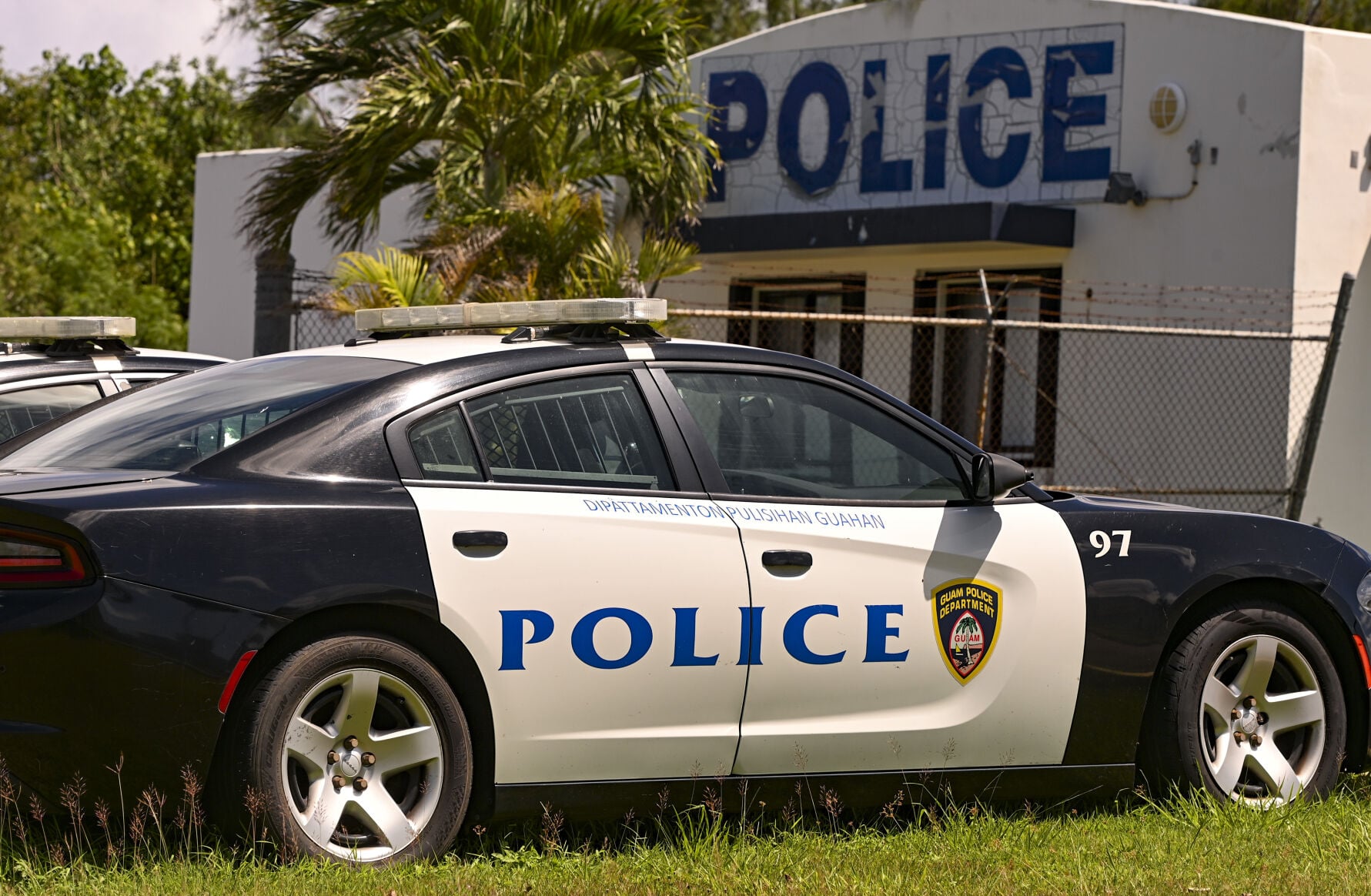
Today's Pacific Daily News tells an all-too-familiar story about another family who preferred their minor daughter remain a sex slave than lose the favor of a police officer. The story is copied here in part (emphases added):

A Guam Police Department sergeant was taken into federal custody Monday and faces charges of sex trafficking a minor, following an FBI investigation that alleges he knowingly recruited, harbored, transported and solicited a girl under the age of 18 for commercial sex acts from Jan. 1, 2024, through July 31, 2025.

According to a federal affidavit filed Monday, the girl reported to GPD officers on July 26, 2025, that she was sexually assaulted by Santos.

Police and FBI documents state the girl told authorities the abuse began around February 2017, when she was about 7 or 8.

The girl told police on July 29, 2025, that she wanted to withdraw her complaint and said she fabricated the allegation out of anger and for attention. A similar complaint and recantation occurred in January 2025.

The girl told a relative that another family member instructed her to recant, warning that Santos would stop helping the family financially if prosecuted. The girl maintained that the assault occurred, but changed her story under pressure.

Pressure from whom? Her family, just like so many victims who told me their stories of clergy sex abuse. This is the so-called "tight-knit family" at work: apparently, it is better to let your child be raped, abused, and molested than to bring shame or disfavor from the powerful upon your family. 

The police officer, the abuser in this case, should be prosecuted and punished accordingly, but so should the girl's family members who enabled the abuse and even told the girl to lie (recant) to protect whatever favors they were receiving from the police officer. 

Maybe...maybe, someday, Guam's parents will stop sucking up to the powerful at the expense of their own children.