Showing posts with label Pope Benedict XVI. Show all posts

Tuesday, October 24, 2023

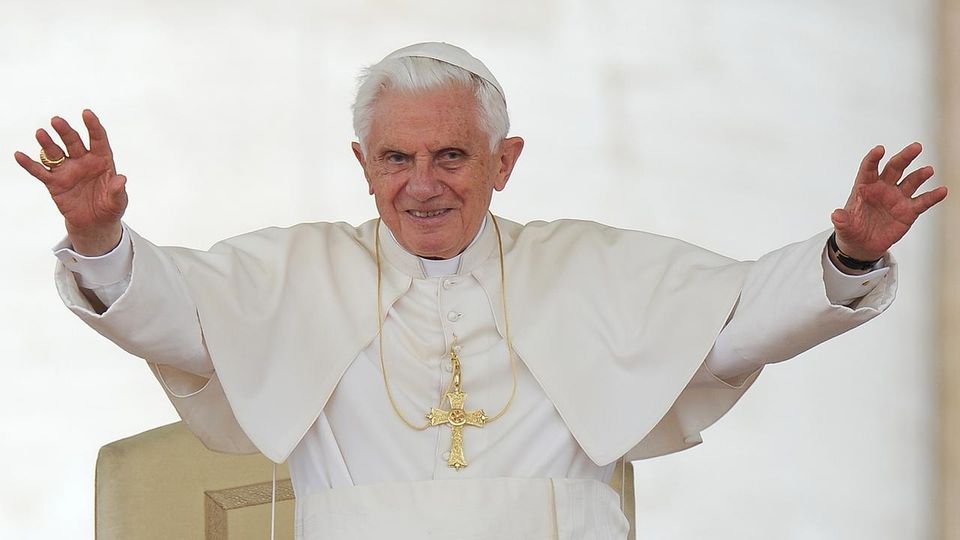
KIKO ARGUELLO WANTED POPE BENEDICT DEAD

By Tim Rohr


A decade after he resigned, it is still a mystery as to why Pope Benedict XVI became only the second pope in two thousand years to walk away from the papacy. Benedict himself blamed his health - even though he would live seemingly well for almost another decade. 

The real reason appears to be "the wolves" that Benedict himself told us about upon his election to the Chair of Peter:

"Pray for me, that I may not flee for fear of the wolves." 

Prior to his election, Benedict was so strong that he was nicknamed "God's Rottweiler." So those "wolves" must have been many and mean, for ultimately Benedict did flee the papacy. 

Apparently, as this video demonstrates, Kiko Arguello, one of the founders of the Neocatechumenal Way, was (and is) one of those wolves.

"The only thing that can save us (the NCW) is if the pope (Benedict) dies." - Kiko Arguello


Monday, April 17, 2023

TOUGH STUFF ON DIVORCE FROM POPE BENEDICT

By Tim Rohr

Once in awhile I come across stuff that is not the usual JungleWatch stuff, but choose to share it nevertheless. So here's one titled: 

ADDRESS OF HIS HOLINESS BENEDICT XVI TO PARTICIPANTS IN AN INTERNATIONAL CONGRESS ORGANIZED BY THE JOHN PAUL II INSTITUTE FOR STUDIES ON MARRIAGE AND FAMILY, Clementine Hall, Saturday, 5 April 2008

A shorter title would be "Pope Benedict reaffirms that divorce and abortion are grave (mortal) sins." Here's what he says:

The Church's ethical opinion with regard to divorce and procured abortion is unambivalent and known to all: these are grave sins which, to a different extent and taking into account the evaluation of subjective responsibility, harm the dignity of the human person, involve a profound injustice in human and social relations and offend God himself, Guarantor of the conjugal covenant and the Author of life.

Benedict had a deep theological mind, so his choosing to place both divorce and abortion, issues which are almost always addressed separately, at the same ethical level is worth pondering.

It doesn't take a deep theological mind like Benedict's to understand that divorce IS abortion: that which is indissoluble pursuant to God's Law is dissolved pursuant to man's, and results, as Benedict says, in an offense to "God himself." 

Despite the Church's very clear, unwavering, and perennial teaching, as Benedict demonstrates here, divorce, especially in the present so-called "age of mercy" (a la "Francis")  has become one of the most misunderstood and confused things in Catholicism.

At the end of this post, I will include references to both the Catechism of the Catholic Church and Canon Law relative to divorce. However, for the purposes of this post, I will share the following in my own layman's terms:

  1. There is no such thing as divorce if you are a Catholic (or a non-Catholic Christian for that matter - but that's another post). 
  2. The sacramentally married are married "until death do we part," regardless of the civil effects of legal papers.
  3. A spouse who has been abandoned or who had just cause to separate (e.g. self-defense) is the "innocent" spouse and has not committed a mortal sin by civilly divorcing or separating.
  4. An "innocent spouse" may continue to receive Holy Communion as he or she has committed no sin - provided that he or she is otherwise in a state of grace.
  5. The spouse who abandons the marriage, assuming he/she willfully abandoned the marriage without what the catechism terms "just cause," is guilty of grave (mortal sin) and cannot avail him or herself of the sacraments without committing sacrilege even if he or she does not remarry.
  6. A civilly divorced spouse, regardless of who is the innocent spouse is living in grave (mortal) sin if he or she is engaging in sexual relations with a person or persons other than with whom he or she is sacramentally married. 

I know. All tough stuff. And in my experience. This "tough stuff" is the NUMBER ONE reason so many Catholics flee The Church for other churches which appear to be much "kinder" to divorce, remarriage, or other stuff that properly belongs to the sacramentally married. 

Here's what The Catholic Church officially teaches.

From the Catechism of the Catholic Church (LINK):

1650 Today there are numerous Catholics in many countries who have recourse to civil divorce and contract new civil unions. In fidelity to the words of Jesus Christ - "Whoever divorces his wife and marries another, commits adultery against her; and if she divorces her husband and marries another, she commits adultery" the Church maintains that a new union cannot be recognized as valid, if the first marriage was. If the divorced are remarried civilly, they find themselves in a situation that objectively contravenes God's law. Consequently, they cannot receive Eucharistic communion as long as this situation persists. For the same reason, they cannot exercise certain ecclesial responsibilities. Reconciliation through the sacrament of Penance can be granted only to those who have repented for having violated the sign of the covenant and of fidelity to Christ, and who are committed to living in complete continence.

2384 Divorce is a grave offense against the natural law. It claims to break the contract, to which the spouses freely consented, to live with each other till death. Divorce does injury to the covenant of salvation, of which sacramental marriage is the sign. Contracting a new union, even if it is recognized by civil law, adds to the gravity of the rupture: the remarried spouse is then in a situation of public and permanent adultery: If a husband, separated from his wife, approaches another woman, he is an adulterer because he makes that woman commit adultery, and the woman who lives with him is an adulteress, because she has drawn another's husband to herself.

1665 The remarriage of persons divorced from a living, lawful spouse contravenes the plan and law of God as taught by Christ. They are not separated from the Church, but they cannot receive Eucharistic communion. They will lead Christian lives especially by educating their children in the faith.

2385 Divorce is immoral also because it introduces disorder into the family and into society. This disorder brings grave harm to the deserted spouse, to children traumatized by the separation of their parents and often torn between them, and because of its contagious effect which makes it truly a plague on society.

2400 Adultery, divorce, polygamy, and free union are grave offenses against the dignity of marriage.

2386 It can happen that one of the spouses is the innocent victim of a divorce decreed by civil law; this spouse therefore has not contravened the moral law. There is a considerable difference between a spouse who has sincerely tried to be faithful to the sacrament of marriage and is unjustly abandoned, and one who through his own grave fault destroys a canonically valid marriage.

1614 In his preaching Jesus unequivocally taught the original meaning of the union of man and woman as the Creator willed it from the beginning: permission given by Moses to divorce one's wife was a concession to the hardness of hearts. The matrimonial union of man and woman is indissoluble: God himself has determined it "what therefore God has joined together, let no man put asunder."

1664 Unity, indissolubility, and openness to fertility are essential to marriage. Polygamy is incompatible with the unity of marriage; divorce separates what God has joined together; the refusal of fertility turns married life away from its "supreme gift," the child (GS 50 § 1).

2383 The separation of spouses while maintaining the marriage bond can be legitimate in certain cases provided for by canon law. If civil divorce remains the only possible way of ensuring certain legal rights, the care of the children, or the protection of inheritance, it can be tolerated and does not constitute a moral offense.

Canon Law's ultimatum is here:

Can. 1141 A marriage that is ratum et consummatum can be dissolved by no human power and by no cause, except death.

However, the Church recognizes legitimate grounds for separation, and in the case of marriage involving unbaptized persons, dissolution. The canons addressing these matters are here beginning at Can. 1141.


Sunday, January 8, 2023

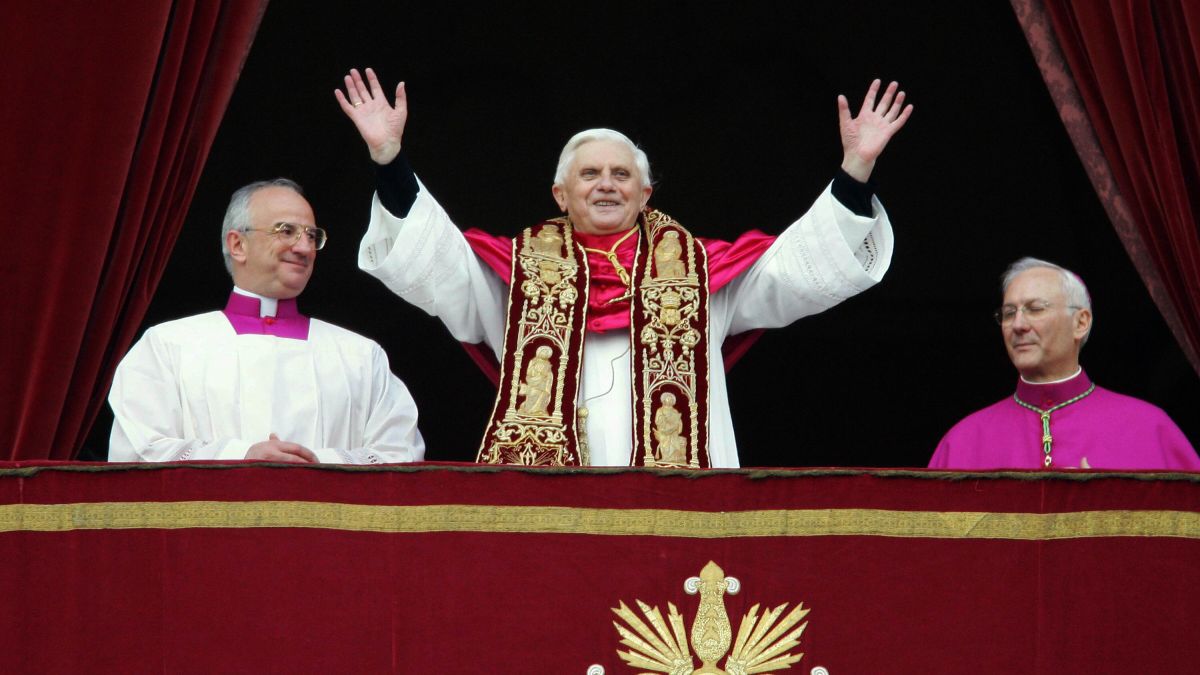
SORRY POPE BENEDICT - I WISH YOU HAD DIED IN PETER'S CHAIR

By Tim Rohr


As expected, the mainstream side of conservative Catholic media is rushing to canonize the late Pope Benedict XVI. A recent article by the EWTN-owned National Catholic Register echoed most of what that media is saying in its article "Benedict's Prophetic Voice." 

One thing for sure is that Benedict was indeed a saintly man, and the Church's saint-making process (canonization) pretty much looks only at the saintly qualities of its subject and not necessarily at what he or she said or did while occupying a particular ecclesial office, not even the Chair of Peter. 

So, in that regard, Benedict will most probably follow his predecessor, John Paul II, into sainthood -  though probably not while Francis is pope. 

According to some sources that dare to speak up about this, Francis has done his best to downplay the death of his predecessor:

— Neither in Vatican City, nor in its extraterritorial dependencies, nor in its nunciatures, was official mourning declared. The bells did not ring for death, nor did the flags fly at half mast. This last detail was surprising. Any country has this measure of mourning when a relatively important person dies. For the Vatican and for the court of Pope Francis, Pope Benedict XVI was not. Curiously, the Italian state and Great Britain ordered their flags to be flown at half mast on December 31. - Caminante Wanderer (translated)

It's quite possible, given his "real" humility, that Benedict wanted it this way. But we don't know. What we do know - or at least intelligently conjecture - is that Benedict was run out of town by a red-robed mafia who replaced him with Francis. We know this because certain members of said Mafia have bragged about how they did it. 

How much Francis had to do with this coup, we don't know. But what we do know is that Francis has spent almost his entire pontificate undoing much of what Benedict did, i.e. the Vatican Mafia's agenda - in particular Francis' functional abortion of Benedict's restoration of the right of every priest to celebrate the Traditional Mass. 

In my opinion (not that it matters), the blame - if I can call it that - for much of the current mess the Church is now in lies with Benedict. Whether or not he was told by God to step down is something we can't know for sure. But what we do know for sure is that Benedict's abdication - and that is what it was - opened the door for what walked in...or seeped in.

Sorry Pope Benedict, but I personally wish you would have died in Peter's Chair, like everyone of your predecessors save one. 


Sunday, January 1, 2023

THOUGHTS ON THE SECOND DEATH OF POPE BENEDICT XVI

By Tim Rohr

Pope Benedict XVI ("B16) died yesterday, on the last day of 2022. But he also died in February 2013. 

As the National Catholic Register notes: 

"In a real sense, then, his papacy “died” with his resignation. To continue the analogy, while they normally happen at the same time, the death of a pontificate is distinct from the death of the man himself." 

B16 was only the second pope in two thousand years to resign the papacy, and the first pope in 600 years to do so. 

Why he resigned will long be debated. B16's own reason was that he was in frail health.

My thought was always "so?"

I know that sounds disrespectful, but he is Pope, i.e. "Papa" for a reason. Those of us who are fathers in the natural world don't get to resign as "father." And those that do ("deadbeat dads") are rightly questioned and usually punished.

Sunday, September 8, 2019

TANQUAM NON FUERIT - Part 1

Recently, both Pope Emeritus Benedict XVI and our own archbishop (of Agana, who was probably just echoing Benedict) have lain at least part of the blame - for what Benedict himself once called “the filth in the Church” - at the feet of “The Sexual Revolution.”


Reuters reported that Benedict wrote:


“Among the freedoms that the Revolution of 1968 sought to fight for was this all-out sexual freedom, one which no longer conceded any norms.”

As much as I love and respect Benedict 16 (and our new archbishop), Ben 16 must be fingered as one of the progenitors of the problem which he now wants to criticize at age 91.

Several years before 1968, and "Woodstock (1969), there was Vatican II (1961),  the Original Revolution.

Now, hang on, hear me out. I'm not the Latin Mass reactionary that some think I am (I don't even attend the only Latin Mass available on Guam - for reasons I may reveal someday).

Ben 16 himself said that he participated in throwing out the "schema" of John 23 on the FIRST day of the Council.

I copy here part of a column I wrote for the Umatuna, and titled "The Lost Synod,"  published on 3/3/13:

Pope Benedict is one of the last living major figures who was present at the Council and he has spent much of his pontificate orienting the church towards its true meaning. Thus, the news that he would be holding an informal “chat” (as he called it) about the Council just days before retirement, had the air of a sort of “tell all” - a sharing of thoughts not normally shared in the otherwise careful and restrictive world of papal statements.

The pope did not disappoint - and left us much upon which to reflect. But the comment which caught my attention was his passing reference to the “Roman Synod”. It caught my attention because the Roman Synod is rarely if ever referenced by church authorities, and is considered by some to be a “lost synod” - erased, actually.

According to the Italian historian, Romano Amerio, there is no trace of the texts of the Roman Synod in any diocesan curias or archives, and can only be found in secular libraries. (1) Given the significance of the Synod, it’s erasure from church records is a clue to why disorientation appears to plague the legacy of the Council to this day.

The Roman Synod was convened by Pope John XXIII in January, 1960. It was meant to be the “solemn forerunner of the larger gathering (Vatican II) which it was meant to prefigure and anticipate” (2), and at which, the schema, the plans for the Council, as prepared by the pope’s preparatory commission, were finalized and promulgated.

According to Amerio, Pope John believed the Council would be completed in a couple of months. The pope’s hope for a speedy council was prompted by his belief that his preparatory commission had adequately prepared the schema for the Council. Thus the Council itself would be a rather simple and straightforward affair of fleshing out the schema and ratifying the final documents. “Over by Christmas”, said the Pope on October 11, 1962, the first day of the Council. (3)

Of course the Council was NOT “over by Christmas” nor the next, nor the next. The Council carried on for three years during which Pope John died. But it could be said that his plans for the Council died first. For as Amerio recounts, and Benedict reflects, the bishops’ first order of business at the Council was to set aside every one of the prepared schema, effectively negating nearly two year’s of work by the pope’s preparatory commission and nullifying all that he promulgated at the Roman Synod. (4)

In fact, as if to emphasize that this was their Council (the bishops) and NOT the pope’s, Amerio records that not only was the Synod never referenced in any Council document,  every trace of it was deleted from church archives. It was treated, as Amerio says, “tanquam non fuerit” (“as if it had never been”). (5)

Throwing the pope’s agenda in the trash is a pretty profound way to commence an ecumenical council, especially one of the size and impact of Vatican II. However, even Pope Benedict saw this as a good thing. In his “chat”, Benedict labeled the Roman Synod a “negative model” - a view which implies that he saw the tossing of its texts overboard (even if they did contain the papal desires) a sign that the Holy Spirit was present at the Council from the beginning.

In short, the Council, immediately upon convening, unmoored itself from the pope who had convened it. And while such an action may well be evidence of the presence of the Holy Spirit guiding the Council beyond the mere wishes of a particular pope, it calls into question the credibility of those who insist that the effects of the Council were envisioned by John XXIII. As we just saw, and as Benedict affirmed, they were not.

In fact, not only did the final documents of the Council NOT embody Pope John’s vision as promulgated at the Roman Synod, according to Amerio, the papal agenda “was contradicted and negated in almost every detail.” (6) Nowhere is this more obvious than in the liturgical legislation called for by Pope John at the Roman Synod.

Later, both John Paul II and Benedict XVI, would be warriors for "Tradition." However, at Vatican II, in the sex-soaked 60's, they were both young revolutionaries - members of the "Periti" - the theological "experts" who ran Vatican II while the bishops, descendants of the Apostles, partied, drank, and signed (remember: Judas was an Apostle) wherever the Periti told them to - for much less than "30 pieces of silver."

(TO BE CONTINUED...)